


One of the report’s strongest economic insights is the overwhelming caste-linked concentration within bonded labour.
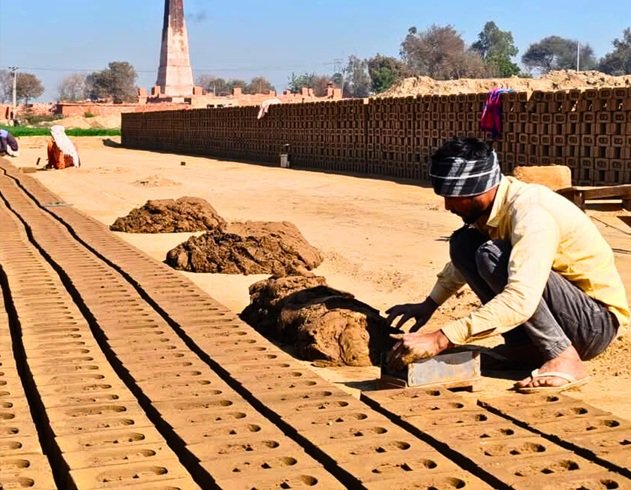
The newly released Report on Migrant Bonded Labour in India 2025 provides a sharp economic lens on an issue long treated as a social or humanitarian concern. It reveals that bonded labour continues to operate as a major distortion within India’s informal economy, affecting labour productivity, wage structures, and long-term national development. Based on a rigorous survey of 950 rescued bonded labourers and interactions with nearly 1,000 workers across 19 states, the findings show that the persistence of bonded labour undermines India’s aspirations for inclusive growth, skilled employment, and a stable labour market. While India positions itself as a rising global economic power, the existence of such exploitation exposes significant cracks in labour governance, enforcement, and institutional accountability. The report highlights that bonded labour is not a peripheral or sporadic issue but a systemic phenomenon affecting major sectors like brick kilns, agriculture, construction, and small-scale manufacturing—industries deeply integrated into rural and peri-urban economies. This has direct implications for India’s GDP growth, productivity metrics, poverty reduction efforts, and human capital development. The data clearly demonstrates that without eliminating bonded labour, India risks maintaining a dual labour economy—one productive and protected, the other extractive and oppressive—ultimately weakening the country’s long-term economic trajectory.
Caste-Linked Economic Exclusion
One of the report’s strongest economic insights is the overwhelming caste-linked concentration within bonded labour. All 950 rescued workers belonged to SC, ST, or OBC communities, with Scheduled Castes making up 63%, underscoring how caste hierarchy continues to shape access to employment, wages, and mobility. Economically, this creates a segmented labour market where historically marginalised groups remain trapped in low-productivity, high-risk, and low-wage informal sectors. Such segmentation not only restricts social mobility but also weakens the overall workforce by limiting the entry of millions into skilled or semi-skilled roles that contribute more productively to the economy.
The absence of land ownership, limited educational access, and discriminatory social practices force marginalised communities to depend on seasonal, unregulated labour markets, reinforcing exploitation. Furthermore, discriminatory barriers prevent workers from seeking legal recourse or negotiating fair wages, reducing labour bargaining power at a structural level. This caste-driven labour allocation results in an underutilisation of India’s human capital, suppressing wage growth and productivity across entire regions. By allowing caste-based labour patterns to continue, India risks perpetuating generational poverty and undermining its potential demographic dividend, as large sections of the population remain locked out of mainstream economic opportunities that contribute to long-term national growth.
Wage Theft and Market Distortion
The report exposes large-scale wage suppression that creates significant distortions across India’s labour markets. More than 53% of workers received no wages, with an average unpaid wage amount of ₹32,514, demonstrating that wage theft is a foundational element of bonded labour systems. This has broader economic consequences: artificially reduced labour costs allow exploitative sectors to maintain lower production expenses, enabling them to undercut formal and law-abiding enterprises. Such unfair competition discourages compliance, weakens formal sector expansion, and incentivizes informal operators to continue exploitative models. The data also challenges the long-standing narrative that debt is the primary cause of bonded labour.
In reality, the average unpaid wage amount was six times higher than the average debt, meaning workers were owed far more than they supposedly borrowed. This shifts the economic interpretation—bonded labour persists because it is profitable for employers, not because of workers’ indebtedness. Wage theft directly reduces consumption capacity among the poorest households, lowering demand in the rural economy, which in turn affects local markets and micro-enterprises. When millions earn far below minimum wages, aggregate demand falls, weakening rural GDP growth. Thus, bonded labour not only harms workers but also undermines India’s broader economic stability and competitive fairness within key industries.
Human Capital Loss: Women and Children
The economic cost of bonded labour becomes even more severe when viewed through the lens of human capital erosion, especially among women and children. The report documents 55 rescued children, with only 14 enrolled in school after rescue, revealing deep structural failures in education and rehabilitation. The absence of education traps these children in low-skill, low-wage labour markets for life, reducing their future productivity and depriving India of a potentially skilled young workforce. Similarly, women—who make up 46% of rescued workers—face systemic barriers such as unpaid labour, sexual harassment, lack of independent wage recognition, and restricted access to health and skill development services. These factors significantly diminish their economic participation and productivity.
In Maharashtra’s sugarcane belt, economically driven coercive practices like forced hysterectomies demonstrate a devastating intersection of gender violence and labour exploitation, with long-term health and income consequences. When women are excluded from skill training, wage rights, or healthcare, entire households become economically vulnerable. This contributes to lower household incomes, reduced investment in children’s education, higher medical costs, and increased dependency on exploitative labour. Human capital losses at this scale weaken India’s labour market resilience, diminish productivity rates, and undermine the nation’s long-term development goals and demographic dividend.
Legal Failure and High Informality
A major economic insight from the report is the systemic failure of legal enforcement, which fuels informality and weakens rule-based economic growth. Over 80% of rescued bonded labourers had no FIR registered, and conviction rates after 2016 stand at a mere 3.6%. Such low enforcement effectively incentivises exploitative labour practices, as employers face minimal legal or financial repercussions. This fosters a high-informality economy where compliance with labour laws becomes optional rather than mandatory. Informality weakens tax revenues, distorts labour mobility, reduces worker protections, and restricts productivity improvements that are essential for India’s long-term economic aspirations.
Administrative delays—such as failure to issue release certificates, non-completion of summary trials, or refusal by district authorities to record statements—create an environment where bonded labour thrives unchecked. This parallel illegal labour system operates outside minimum wage laws, health regulations, and labour protections, making it cheaper but far more exploitative. Such practices create downward pressure on wages even in compliant industries, discouraging fair competition and suppressing overall economic growth. If India is to strengthen its labour markets, expand formal employment, and improve productivity, it must treat enforcement failures as serious economic liabilities rather than bureaucratic lapses. A functioning legal framework is not only a matter of justice—but a prerequisite for sustainable economic development.
Rehabilitation Deficits and Economic Risks
The rehabilitation gaps documented in the report reveal how incomplete implementation of welfare schemes contributes to long-term economic vulnerability. The 2016 scheme promises ₹1 lakh for adult men, ₹2 lakh for women and children, and ₹3 lakh for extreme cases, yet the majority of rescued workers received none of this compensation. Further, 99.67% received no skill development, 85% lacked MGNREGA access, and nearly 70% had no health insurance, leaving workers economically unprepared to transition into secure livelihoods. Without financial stability, training, or social protection, freed workers often return to similar exploitative conditions, creating a recurring cycle of labour bondage. Economically, this weakens rural labour markets by maintaining a large pool of low-wage, vulnerable workers who lack bargaining power.
These conditions suppress rural wages and productivity, limit mobility into formal employment, and reduce human capital formation in entire communities. Rehabilitation failures also increase public expenditure over time because unresolved poverty leads to higher dependence on welfare, health costs, and emergency interventions. Without a robust rehabilitation system, bonded labour becomes a recurring structural burden rather than a problem solved through rescue operations. Strengthening rehabilitation, therefore, is not merely a social obligation—it is an economic necessity for building a resilient, productive, and equitable labour market capable of supporting India’s long-term development vision.
©ambedkarchamber.com