


Why Ambedkar’s Economics Matter in Today’s India?
- To reach US$30 trillion, India must unlock the power of all its people. To increase per capita income, India must empower its poorest citizens. To become a global economic force, India must democratize entrepreneurship.
- On Mahaparinirvan Divas, remembering Ambedkar as an economist means understanding his message that freedom is incomplete without economic strength.
- Today, when the nation speaks of growth, startups, innovation, and a global future, Ambedkar’s economics has become more relevant than ever.
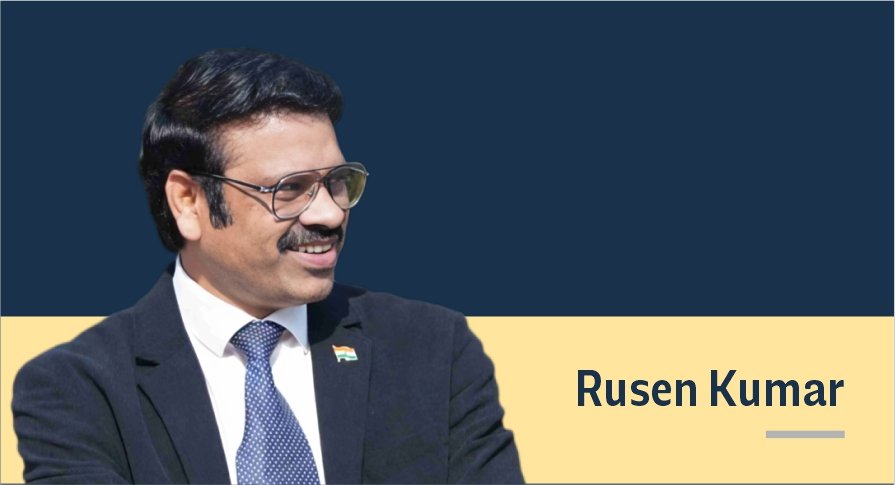
By Rusen Kumar
India dreams of becoming a US$30 (~₹249 lakh crore) trillion economy by 2047 with a per capita income of US$18,000 (~₹14.94 lakh). This is an inspiring vision—ambitious, bold, and transformative. But we must confront a fundamental truth: India cannot achieve this goal if the largest sections of its population—SC, ST, OBC, Minority, EWS, DTNT, LGBTQ+, and PwD communities—remain economically excluded.
By 2047, India wants to be Viksit—But no country becomes developed with exclusion as its economic model. A nation cannot become rich when its people remain poor. As India sets its sights on Viksit Bharat @ 2047, it must return to the economic wisdom of Dr. B.R. Ambedkar, whose ideas remain unmatched in clarity, justice, and practicality.
A nation cannot call itself Viksit when its citizens lack equal access to opportunity.
A nation cannot unlock innovation when millions of potential entrepreneurs are denied credit, networks, and dignity.
Viksit Bharat 2047 must therefore shift its development lens from GDP to EDP—Economic Democratic Participation.
Today, as India stands at a crossroads—between aspiration and inequality, growth and justice, technology and exclusion—the economic questions Babasaheb Dr. B.R Ambedkar raised remain startlingly relevant. His vision was not only political; it was profoundly economic, rooted in productivity, dignity, and the restructuring of society’s economic foundations.
Dr. B.R Ambedkar was among the most outstanding intellectuals of India in the 20th century. His work in economics is noteworthy. Before becoming the chief architect of the Constitution, Ambedkar was a trained economist who had studied at Columbia and the London School of Economics. He understood that economic inequality is the mother of all social inequalities, and that social reform without economic restructuring would produce only partial liberation.
India today faces challenges in inequality, unemployment, agrarian distress, and social mobility. Ambedkar warned about these issues a century ago.
On Mahaparinirvan Divas, remembering Ambedkar as an economist means understanding his message that freedom is incomplete without economic strength. He wanted India to rise. But he wanted every Indian to rise with it. His economics is a call for equality, dignity, and empowerment for all. Ambedkar firmly believed that economics is the foundation of social equality.
We at Ambedkar Chamber of Commerce and Industry firmly believe that “India’s economic destiny depends on inclusive empowerment, not selective growth.“

Viksit Bharat Mission has 6 Key Goals:
- 100% poverty elimination across the nation.
- 100% access to good-quality school education for every child.
- 100% availability of high-quality, affordable, and comprehensive healthcare for all citizens.
- 100% skilled labour force with meaningful and productive employment opportunities.
- 70% participation of women in economic activities and nation-building.
- Empowered farmers contributing to India becoming the food basket of the world.
The Hard Question India Must Ask
Babasaheb Dr. B.R. Ambedkar believed that economic independence is the highest form of liberty. He understood that no community can rise without control over its livelihood, enterprises, and resources.
Entrepreneurship is not just a business activity—it is a movement of self-respect.
Today, millions from marginalized backgrounds are exploring business opportunities, becoming job creators, and stepping into markets once closed to them. This shift reflects Babasaheb’s dream: a society where opportunity is not inherited—it is created.
If entrepreneurship is the driver of economic expansion, If small businesses are the backbone of national productivity,
If innovation is the fuel of a $30 trillion future—
How can India grow when its marginalized entrepreneurs cannot even start?
SC, ST, OBC, Minority, EWS, DTNT, LGBTQ+, and PwD communities represent over 70% of India’s population.
If they remain on the margins, India stands no chance of becoming a global economic superpower.
A $30 trillion dream cannot be built on weak foundations.
Zero Poverty
The Non-Negotiable First Step
Ambedkar was perhaps the earliest Indian thinker to link poverty with dignity and democracy. For him, poverty was not only an economic condition but also a form of violence.
Viksit Bharat begins where poverty ends. Economic vision without poverty eradication is an illusion.
Ambedkar called poverty a form of structural violence—
A silent force that crushes dignity and restricts upward mobility.
Zero Poverty must become a national mission.
Not a slogan.
Not a scheme.
But a civilizational commitment.
A nation aspiring for greatness must ensure:
- No community remains trapped in historical disadvantage
- No citizen is forced to choose between survival and ambition
- No entrepreneur is denied an opportunity due to their social background
Financial Inclusion
Opening the Doors to Economic Citizenship
Ambedkar was a pioneer of financial reforms. His work shaped the Reserve Bank of India. He argued for accessible credit, regulated markets, and fair monetary systems. Today, financial inclusion is the new battlefield of equality.
India today searches for models of inclusive growth. Ambedkar had already designed one— a growth model rooted in human capital, equal opportunity, scientific temperament, and moral economics.
Digital banking, UPI, Jan Dhan Yojana, and fintech solutions are steps forward, but structural barriers remain—low financial literacy, limited access to credit, fear of the banking system, and lack of collateral.
Ambedkar would urge us to go beyond accounts and cards. He would demand economic citizenship, where every individual can save, borrow, invest, insure, and grow.
Economic citizenship means the right to participate, the right to risk, and the right to grow.
Ambedkar’s work shaped the Reserve Bank of India.
He believed access to finance is access to freedom.
Yet today, millions of marginalized entrepreneurs remain outside formal credit.
They do not lack ideas.
They lack trust, networks, capital, and visibility.
Financial inclusion must move beyond opening bank accounts.
It must enable:
- Easy credit for first-generation entrepreneurs
- Insurance and risk protection
- Digital financial literacy
- Micro-venture funds for marginalized communities
Economic Empowerment
The Engine of National Growth
Babasaheb taught us that economic empowerment is a structural process, not an emotional appeal. It requires:
- Education
- Skills
- Property rights
- Market participation
- Institutional support
Economic empowerment begins when people move from informal survival to formal prosperity.
It becomes real when families create wealth that can be transferred to the next generation.
Empowerment is not welfare.
Empowerment is not tokenism.
Empowerment is structural access to markets, capital, education, and ownership.
Ambedkar said political democracy fails without economic democracy.
This is the greatest warning for India today.
A $30 trillion economy will require:
- Millions of new enterprises
- Millions of job creators
- A wide base of innovators
- A skilled and confident workforce
- A strong cooperative and MSME ecosystem
This cannot be achieved when the majority remains structurally excluded.
Entrepreneurship Development
India’s Most Undervalued Opportunity
Ambedkar understood that jobs alone cannot uplift society. He encouraged enterprise, industry, and self-reliance as tools of empowerment.
His vision aligns perfectly with today’s startup movement. Yet the entrepreneurial ecosystem remains unequal. Access to capital, mentorship, and networks is still limited for weaker sections.
SC, ST, OBC, DTNT, Minority, EWS, LGBTQ+ and Persons with Physical Disability (PwD) and every marginalized entrepreneur represent untapped economic intelligence.
Their participation is not a social obligation—it is a national economic strategy.
Entrepreneurship among historically deprived communities can:
- Unlock local innovation
- Create millions of dignified jobs
- Reduce regional economic imbalances
- Strengthen grassroots markets
- Expand India’s internal demand
A developed India will not be built by a few large corporations, — It will be built by millions of empowered small and medium entrepreneurs.
The Role of Ambedkar Chamber
Building a New Economic Architecture
Ambedkar Chamber serves as a platform where Babasaheb’s economic philosophy becomes a living force— guiding entrepreneurs, scholars, policy thinkers, and institutions toward a future rooted in justice and innovation.
The Chamber stands for economic dignity, ethical leadership, entrepreneurship with purpose, and a democracy empowered by opportunity.
It is a reminder that Ambedkar’s economic message is not academic—it is actionable.
The Ambedkar Chamber of Commerce stands for one mission:
To bring marginalized entrepreneurs to the center of India’s growth story.
Our work focuses on:
- Creating entrepreneurial ecosystems
- Connecting entrepreneurs to credit, markets, and mentors
- Encouraging startup culture in underserved communities
- Training the next generation of business leaders
- Advocating for policies that ensure genuine economic inclusion
A new economic revolution must rise from the bottom.
We stand for an India where every entrepreneur—regardless of caste, class, or background—can dream big and execute bigger.
Only then will India rise.
“Ambedkar lives wherever there is a struggle for justice, a commitment to reason, and an uncompromising dream of equality.”
“Ambedkar’s economics is not just relevant today—it is India’s greatest opportunity.”
“India will become Viksit only when every citizen becomes economically powerful. That is the India Ambedkar dreamed of. That is the India we must build. And that is the India the Ambedkar Chamber of Commerce is committed to shaping.”
Rusen Kumar is the Founder and National President of Ambedkar Chamber of Commerce and Industry (Ambedkar Chamber).