


The debt-to-GDP ratio is expected to decline to 55.6% from 56.1%, signaling continued consolidation without compromising growth impulses.
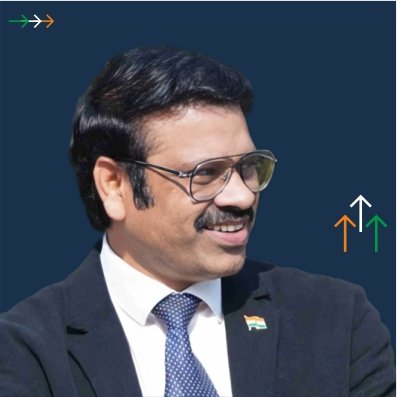
By Rusen Kumar
The Union Budget 2026-27, presented by Finance Minister Smt. Nirmala Sitharaman on February 1, 2026, in Parliament, marks a pivotal step toward realizing the vision of Viksit Bharat by 2047. This budget, the first prepared in Kartavya Bhawan, is guided by three core kartavyas (responsibilities): accelerating and sustaining economic growth through enhanced productivity, competitiveness, and global resilience; fulfilling people’s aspirations by building their capacities as partners in national prosperity; and ensuring inclusive participation under the ethos of Sabka Saath, Sabka Vikas, where every family, community, region, and sector gains equitable access to resources, amenities, and opportunities.
From the perspective of the Ambedkar Chamber of Commerce and Industry, which champions economic empowerment for marginalized groups including SC, ST, OBC, women, minorities, EWS, and PwD entrepreneurs, this budget stands out for its strong emphasis on inclusive growth, MSME support, legacy cluster revival, and targeted interventions in employment-intensive sectors like textiles, agriculture, and handicrafts.
These align closely with the Chamber’s mission to promote equitable business opportunities and self-reliance among underserved communities.
Fiscal Framework: Prudent and Growth-Oriented
The budget estimates reflect disciplined fiscal management amid global uncertainties. Non-debt receipts are projected at ₹36.5 lakh crore, with total expenditure at ₹53.5 lakh crore. Net tax receipts stand at ₹28.7 lakh crore, while gross market borrowings are estimated at ₹17.2 lakh crore and net borrowings at ₹11.7 lakh crore.
The fiscal deficit for 2026-27 is targeted at 4.3% of GDP, a marginal improvement from the 4.4% in the revised estimates for 2025-26. The debt-to-GDP ratio is expected to decline to 55.6% from 56.1%, signaling continued consolidation without compromising growth impulses.
Public capital expenditure (capex) has been hiked to a record ₹12.2 lakh crore, up from ₹11 lakh crore in the previous revised estimates. This represents a powerful multiplier for infrastructure-led growth, job creation, and private investment crowding-in—key priorities for fostering entrepreneurship in Tier-II/III cities and among marginalized business communities.

Table 1: Legacy Industrial Clusters & Traditional Sectors
| Initiative | Coverage |
|---|---|
| Legacy Industrial Clusters | 200 clusters targeted for revival |
| Focus Areas | Infrastructure development, technology upgradation |
| Key Sectors | Manufacturing, textiles, traditional industries |
| Expected Impact | Higher productivity, local employment generation |
First Kartavya: Accelerating and Sustaining Economic Growth
The budget proposes six major interventions to scale manufacturing, rejuvenate legacy sectors, champion SMEs, boost infrastructure, ensure energy security, and develop city economic regions.
In manufacturing, seven strategic sectors receive focused attention. The Biopharma SHAKTI scheme, with ₹10,000 crore over five years, aims to position India as a global biopharma hub, including new NIPERs, upgraded institutions, and 1,000+ clinical trial sites. The India Semiconductor Mission 2.0 emphasizes domestic equipment, full-stack IP, and skilled workforce development.
The Electronics Components Manufacturing Scheme outlay rises to ₹40,000 crore. Dedicated Rare Earth Corridors in Odisha, Kerala, Andhra Pradesh, and Tamil Nadu will promote mining and processing. Chemical parks on a plug-and-play model, hi-tech tool rooms by CPSEs, schemes for construction equipment and containers (₹10,000 crore over five years), and an integrated textile program—including the National Fibre Scheme, cluster modernization, mega textile parks, and the Mahatma Gandhi Gram Swaraj initiative for khadi/handloom/handicrafts—offer immense potential for employment and value addition in traditional sectors.
Legacy industrial clusters (200 targeted for revival through infrastructure and tech upgrades) and SME support via a ₹10,000 crore SME Growth Fund and additional ₹2,000 crore for the Self-Reliant India Fund will create “Champion SMEs.” ‘Corporate Mitras’ training in Tier-II/III towns via professional bodies like ICAI will aid compliance and growth for small entrepreneurs.
Infrastructure receives a major push with ₹12.2 lakh crore capex, an Infrastructure Risk Guarantee Fund, CPSE asset recycling via REITs, new freight corridors, 20 national waterways (starting with NW-5), coastal cargo incentives to raise modal share to 12% by 2047, seaplane VGF, and seven high-speed rail corridors (e.g., Mumbai-Pune, Delhi-Varanasi) as growth connectors.
Energy security includes ₹20,000 crore for CCUS over five years. City Economic Regions get ₹5,000 crore per region over five years via challenge mode.
These measures promise to enhance competitiveness, supply chain resilience, and job opportunities—crucial for inclusive entrepreneurship.
Table 2: Key MSME Financing Measures – Union Budget 2026-27
| Measure | Details |
|---|---|
| SME Growth Fund | ₹10,000 crore to create and scale “Champion SMEs” |
| Self-Reliant India Fund | Additional ₹2,000 crore for micro enterprises |
| Target Beneficiaries | MSMEs, micro enterprises, first-generation entrepreneurs |
| Objective | Improve access to risk capital and growth financing |
Second Kartavya: Fulfilling Aspirations and Building Capacity
Focus areas include education-to-employment linkages via a standing committee for services; 100,000 allied health professionals and regional medical hubs for medical tourism; three new AIIMS Ayurveda institutes; scaling veterinary professionals by 20,000+ with private sector subsidies; AVGC labs in schools/colleges; university townships near industrial corridors; girls’ hostels in every district; tourism upgrades including hospitality institute, guide upskilling, and digital knowledge grid; heritage site development (e.g., Lothal, Dholavira); and the Khelo India Mission for sports transformation.
These build human capital, aligning with aspirations for dignified livelihoods.
Third Kartavya: Inclusive Development (Sabka Saath, Sabka Vikas)
Targeted efforts include farmer income enhancement via reservoir/Amrit Sarovar integration, high-value crops (coconut, cashew), and Bharat-VISTAAR AI tool; Divyangjan Kaushal Yojana for PwD in IT/AVGC/hospitality; mental health via NIMHANS-2 and upgrades; Purvodaya focus with East Coast Corridor, tourism destinations, e-buses, and Buddhist circuits; and ₹1.4 lakh crore Finance Commission grants.
Table 3: MSME Support & Capacity-Building Initiatives
| Initiative | Description |
|---|---|
| Corporate Mitras | Professional support for MSMEs |
| Implementing Bodies | ICAI, ICSI, ICMAI |
| Target Regions | Tier-II and Tier-III towns |
| Focus Areas | Compliance, taxation, governance support |
Tax Reforms: Simplification and Compliance Ease
A new Income Tax Act effective April 2026 simplifies rules. Direct tax measures include TCS rationalization (e.g., 2% on overseas tours/education remittances), automated lower deduction certificates, extended return revision, and rationalized penalties/prosecutions. IT sector gets safe harbour enhancements and fast-tracked APAs. Global business attracts tax holidays for cloud services and exemptions for non-residents.
Indirect taxes simplify tariffs (e.g., duty-free inputs for exports, exemptions for critical minerals/Li-Ion cells), promote energy transition, and ease processes via trust-based systems, AEO enhancements, and digital windows.
Table 4: Inclusive Growth Measures Linked to MSMEs
| Sector | Budget Provision |
|---|---|
| Textiles & Handloom | National Fibre Scheme, Textile Expansion Scheme |
| Khadi & Handicrafts | Mahatma Gandhi Gram Swaraj Initiative |
| Export Facilitation | Removal of ₹10 lakh cap on courier exports |
| Inclusion Focus | Rural MSMEs, women entrepreneurs, artisans |
For the Ambedkar Chamber, these reforms reduce compliance burdens on small businesses and cooperatives, while buyback tax rationalization and export opportunities (e.g., courier cap removal) aid inclusive entrepreneurship.
In conclusion, the Union Budget 2026-27 is a forward-looking, balanced document that sustains momentum toward a developed India while prioritizing inclusivity. For marginalized entrepreneurs, it opens doors through MSME funds, cluster revival, textiles/agri focus, and capacity-building—empowering them as equal partners in growth. With disciplined fiscal path and bold investments, it lays a strong foundation for resilient, equitable prosperity.
The author is the Founder and Chairman of Ambedkar Chamber of Commerce and Industry